Same product family
Ericsson
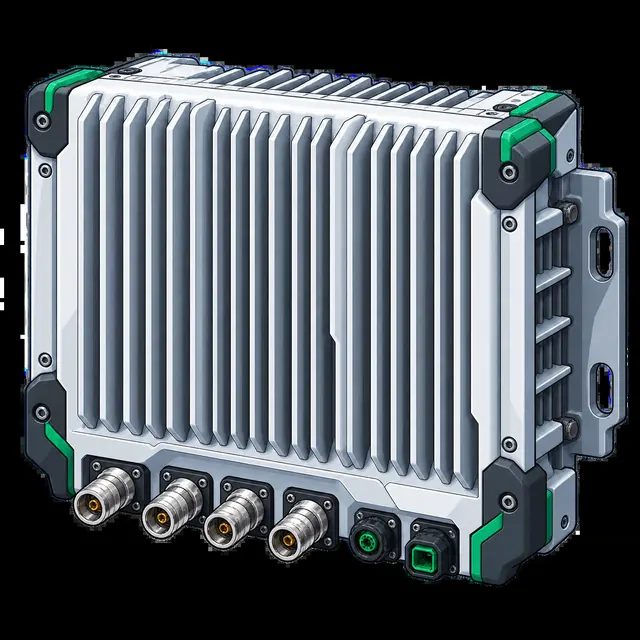
Radio 2212 B3
What it does: Radio transmission / reception. Operating RF bands / ranges: B3.
3 part numbers: KRC161496/1 / KRC161496/2 / KRC161496/5
Viewing: model overview
Request a QuoteRequest current availability, condition and pricing. Delivery terms are agreed in the quotation.
Main specifications
TechnologiesB3: G, L, MI, NR, ESS; conditions: [3] ESS (Ericsson Spectrum Sharing) is a software feature. | [4] Lists support for the following standards: MI Cat-M1 (CM), MI NB-IoT in-band (IB), MI NB-IoT guard band (GB), and MI NB-IoT standalone (SA).
Uplink frequency1710–1785 MHz
Downlink frequency1805–1880 MHz
TX / RX modes2T2R
RF output power2 × 80 W; conditions: [5] Requires HWACs (not valid for RUG). | [6] For information on possible power back off or band edge loss, contact Ericsson Technical Sales Support.
Interfaces / connectors2 × 4.3-10 antenna; 2 × optical CPRI FullAXS LC/SFP; -48 V power; 2 × M6 ground; 14-pin DIN external alarm; 8-pin DIN ALD/RET
Interfaces and data rates2 data port(s); cascading support: yes; different line rates on different ports: yes; CPRI line rates: 2.5, 4.9, 9.8, 10.1 Gbps
Power supply490 W; -36.0 to -58.5 V DC; 20 A fuse
FamilyRadio 2212
Installation environmentWall or pole mounting; install as an external-antenna ERS Radio
IP ratingIP65 outdoor class
Additional technical information
- Dimensions
- 420 × 342 × 131 mm (H × W × D), without optional fan
- Weight
- 18.2 kg without optional fan
- Bandwidth
- B3: IBW 75 MHz; operational bandwidth 75 MHz; conditions: [65] For Radio 2212 B3 up to R5: GSM single mode: 20 MHz IBW per RF port. Maximum 20 W per carrier. Supports Virtual IBW. LTE single mode: 20 MHz IBW for 1.4 and 3 MHz carriers per RF port. Maximum 40 W per carrier for 1.4 and 3 MHz carriers. Mixed Mode: 20 MHz IBW for GSM with maximum 20 W per GSM carrier. 75 MHz IBW with 6.6 W per GSM carrier. 20 MHz IBW for LTE 1.4 MHz and 3 MHz LTE carriers with maximum 40 W per carrier. | [66] For Radio 2212 B3 from R5: GSM single mode: 40 MHz IBW per RF port. Maximum 20 W per carrier. Supports Virtual IBW. LTE single mode: 20 MHz IBW for 1.4 and 3 MHz carriers per RF port. Maximum 40 W per carrier for 1.4 and 3 MHz carriers. Mixed Mode: 40 MHz IBW for GSM with maximum 20 W per GSM carrier. 75 MHz IBW with 6.6 W per GSM carrier. 20 MHz IBW for LTE 1.4 MHz and 3 MHz LTE carriers with maximum 40 W per carrier. | [7] Operational bandwidth is the actual bandwidth allocated for carriers.
- Capacity
- GSM: up to 8 carriers in MSR; WCDMA: up to 8 carriers; LTE: up to 75 MHz
- Synchronization
- When operated over its documented classic CPRI interface: CPRI slave synchronization; the radio recovers the incoming CPRI bit clock for radio/link transmission and receives time information from the REC/Baseband
- Chassis
- Self-contained Radio 2212 Radio enclosure; optional external fan assembly
- Modules
- Optional fan assembly NTB101879/1: back cover SXK1253359/1 + fan BKV106208/1
- Functional role
- Radio 2212 outdoor ERS radio unit for an external antenna
- Architecture
- Self-contained wall/pole-mounted ERS Radio enclosure with external antenna and optical CPRI connection to baseband
- Subtype
- 2T2R single-band Standard ERS Radio
- Details
- Acoustic noise 36–59 dB; operating temperature -40 to +55 °C; front wind load 260 N at 50 m/s
- Installation conditions
- Rail / wall / pole
- Connection notes
- Baseband; antenna; AISG TMA/RET
Related equipment
Same product family
Ericsson Radio 2212 B2 B25
Same product family
Ericsson Radio 2212 B5
Same product family
Ericsson Radio 2212 B7
Same product family
Ericsson Radio 2212 B8
Same product family